Reasoning for course recommendation before reasoning models were normal
I was offered the opportunity to present my research on reasoning for course recommendation at MWSCAS 2024, the IEEE 67th International Midwest Symposium on Circuits and Systems. The conference was held in Springfield, Massachusetts, from 11 to 14 August 2024. I passed through Boston as part of the trip, which made the whole experience feel a little surreal because the work had started as a rather constrained local model experiment.
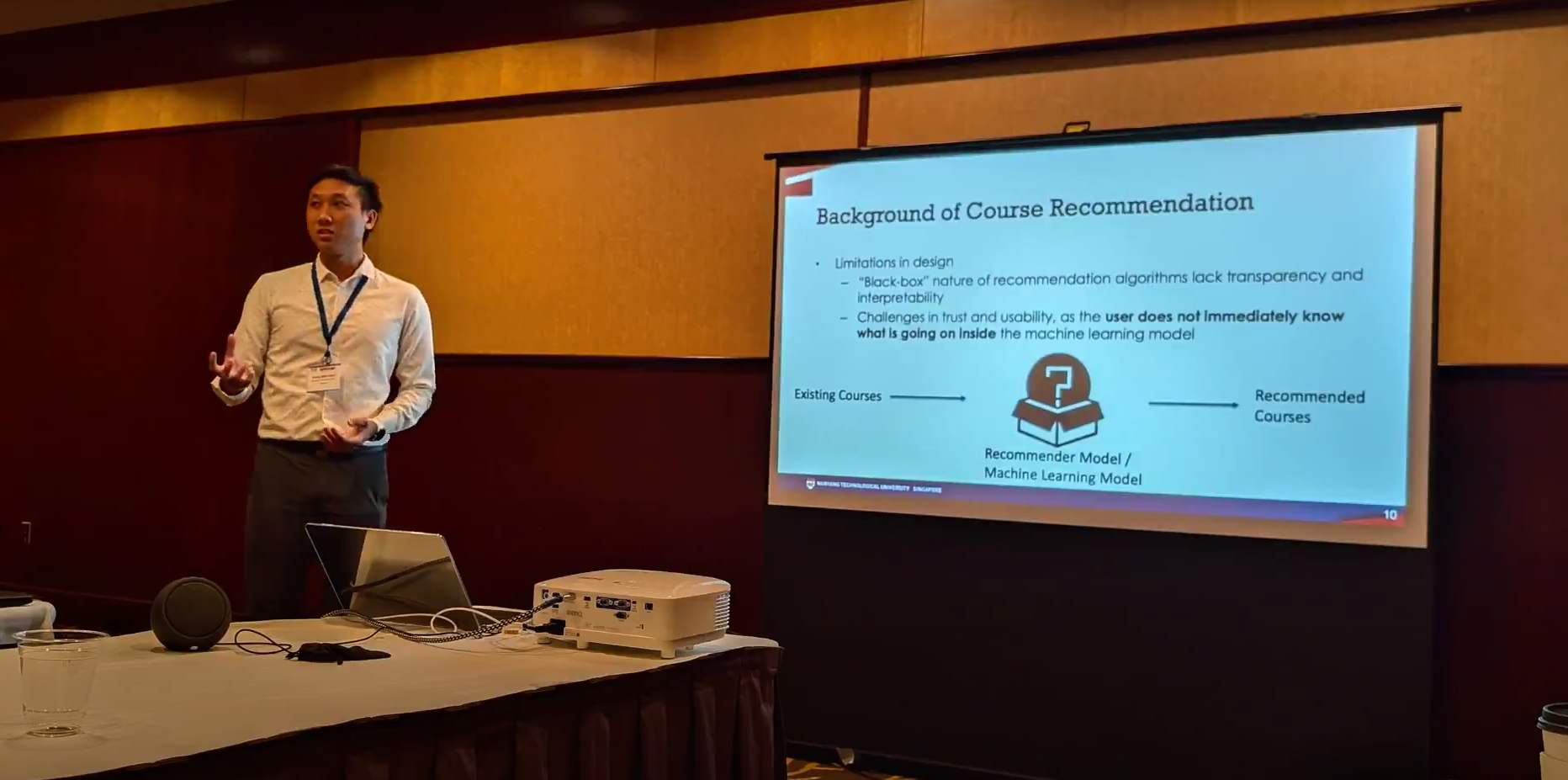
The central problem was simple to state: a recommendation system can suggest a course, but the user still needs to understand why the course makes sense. Without that bridge, even a good recommendation may still feel like a black-box output.
Reasoning models are not yet the obvious category they may become. The models I used were smaller, earlier, and locally deployed. They had limited context length and were not naturally strong at producing stable reasoning. I used chain-of-thought style prompting to trigger more useful rationales, so the model could explain the path between a student profile, course information, and the recommendation.
What stood out from the work was not that prompting magically solved the problem. It did not. The model could still hallucinate, over-explain, or produce a rationale that sounded good but was only weakly connected to the source information. That made evaluation important, because the goal was not to generate a confident paragraph. The goal was to produce a useful explanatory layer.
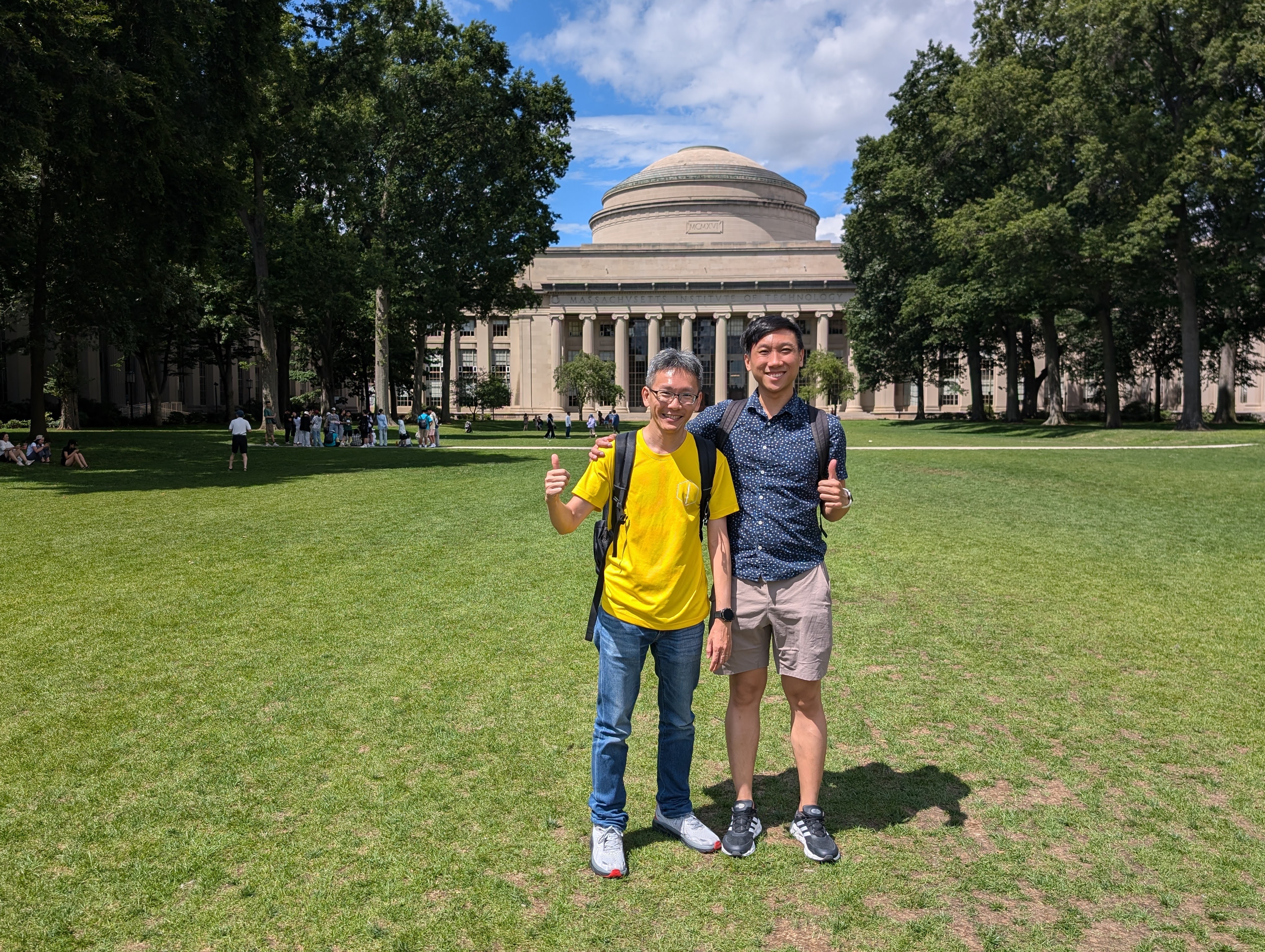
A/Prof Khong is an Associate Professor at NTU's School of Electrical and Electronic Engineering, and his wider work includes signal processing, machine learning applied to education data, and education-related innovation. Having him on the trip made the presentation feel less like a standalone conference slot and more like a small checkpoint in the research direction we had been shaping.
The trip to Springfield gave me a clearer sense that the work sits between engineering and communication. Recommendation quality matters, but the explanation is what helps a human act on the result. That is the part of GenAI work that I am finding more interesting: using the model to support a technical decision rather than simply answer a question.
Footnote: Ported over from my personal blog. Initially posted on 9 August 2024.